
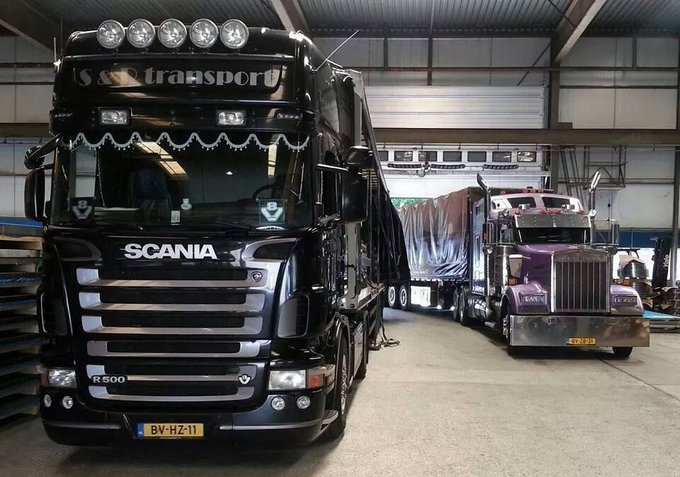
In the world of transportation, semitrucks stand as mighty symbols of efficiency and power, traversing highways and byways, delivering goods to every corner of the globe. Yet, despite their common purpose, the semitrucks found on European and American roads often differ significantly in design, reflecting unique preferences, regulations, and industrial philosophies. Let’s delve into the nuances that distinguish these two iconic juggernauts of the road.
Size and Dimensions:
American Semitrucks: Known for their sheer size and imposing presence, American semitrucks often boast larger dimensions compared to their European counterparts. These trucks typically feature longer trailers and higher ground clearance, accommodating the vast distances and expansive highways of the United States.
European Semitrucks: In contrast, European semitrucks tend to be more compact, reflecting the narrower roads and tighter urban spaces prevalent in many European countries. These trucks prioritize maneuverability, often featuring shorter trailers and lower overall heights to navigate through narrow city streets and winding country roads.
Engine and Powertrain:
American Semitrucks: Renowned for their robust engines and formidable horsepower, American semitrucks are designed to tackle long-haul journeys with ease. They often feature large-displacement diesel engines, delivering abundant torque for hauling heavy loads across vast distances.
European Semitrucks: European semitrucks prioritize fuel efficiency and environmental considerations, often employing smaller, turbocharged diesel engines with advanced emissions control systems. These engines strike a balance between power and efficiency, catering to the shorter distances and stricter emissions standards prevalent in Europe.
Cabin Design and Comfort:
American Semitrucks: Comfort is paramount in American semitrucks, where drivers may spend extended periods on the road. These trucks often boast spacious and luxurious cabins, equipped with amenities such as ergonomic seating, advanced infotainment systems, and ample storage space.
European Semitrucks: European semitrucks focus on practicality and functionality in cabin design. While still offering a comfortable driving environment, European trucks tend to prioritize efficiency and space utilization, with compact cabins optimized for long hours of operation.
Safety Features and Regulations:
American Semitrucks: Safety regulations in the United States emphasize crash protection and driver assistance technologies. American semitrucks may feature advanced safety systems such as collision mitigation, lane departure warning, and electronic stability control to enhance driver safety on the highway.
European Semitrucks: European regulations place a strong emphasis on pedestrian safety, environmental impact, and driver well-being. European semitrucks often come equipped with features like advanced braking systems, adaptive cruise control, and aerodynamic enhancements to improve fuel efficiency and reduce emissions.
Cultural and Aesthetic Influences:
American Semitrucks: In the United States, semitrucks are often seen as symbols of freedom and individuality, with drivers customizing their rigs to reflect personal tastes and preferences. From elaborate paint schemes to chrome accents and custom lighting, American semitrucks often exhibit a distinct sense of style and personality.
European Semitrucks: European semitrucks reflect a more understated and utilitarian aesthetic, emphasizing functionality and practicality over flamboyance. While some customization options exist, European trucks tend to maintain a more uniform appearance, reflecting a culture that values efficiency and professionalism on the road.
In conclusion, while European and American semitrucks share a common purpose of transporting goods across vast distances, their designs reflect distinct regional preferences, regulations, and cultural influences. Whether cruising down the open highways of America or navigating the bustling streets of Europe, these iconic vehicles stand as testaments to the ingenuity and diversity of the global transportation industry.
